

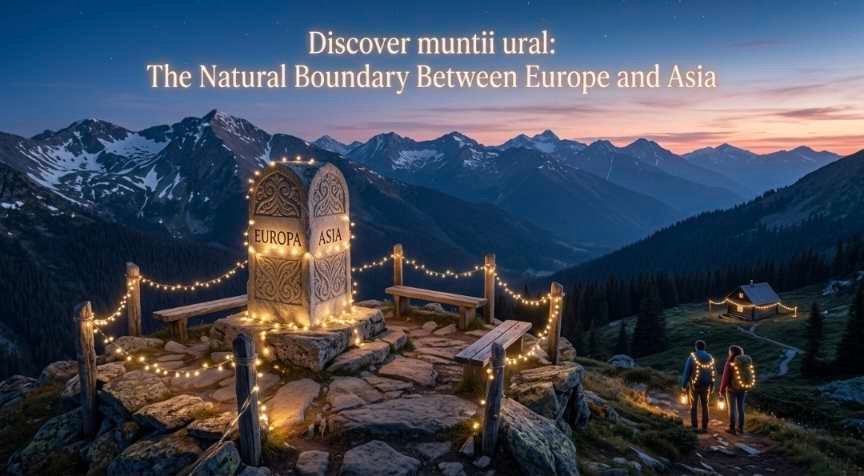
The vast mountain chain known as muntii ural has fascinated explorers, historians, and nature lovers for centuries. Stretching across western Russia, this remarkable range forms one of the most widely recognized natural boundaries between Europe and Asia. Beyond geography, it holds a rich mix of geological history, diverse ecosystems, and cultural significance.
From ancient trade routes to modern scientific exploration, the mountains have played a vital role in shaping the surrounding regions. Understanding this impressive landscape reveals how natural features can influence culture, biodiversity, and economic development.
Geographic Location and Natural Significance
The mountain system extends for more than 2,500 kilometers from the Arctic Ocean in the north to the steppes of Kazakhstan in the south. Because of this massive stretch, the region passes through several climate zones, ranging from tundra to forest and grassland.
Many geographers consider muntii ural the traditional dividing line between the European and Asian continents. This natural border has been used in maps, textbooks, and cultural discussions for centuries.
The mountains are not extremely high compared to other global ranges, but their length and historical importance make them one of the most well-known geological formations in Eurasia. Numerous rivers originate from these slopes, providing water resources for surrounding areas and contributing to the ecological balance of the region.
Geological Formation and Ancient History
How the Mountains Were Formed
The formation of these mountains dates back roughly 250 to 300 million years. They were created during a major tectonic collision between the eastern edge of the European continent and the Siberian landmass. Over time, intense geological pressure pushed layers of rock upward, forming a long mountain chain.
Although erosion has gradually lowered the peaks, the mountains still display a remarkable variety of rock formations. Scientists study these formations to understand the Earth’s geological past and continental movements.
Valuable Mineral Resources
Another notable aspect of the range is its extraordinary mineral wealth. The mountains contain deposits of iron, copper, gold, platinum, and precious stones. Because of this abundance, the region became a key center for mining and metallurgy during different historical periods.
These natural resources have contributed significantly to the economic development of nearby settlements and industries.
Unique Wildlife and Natural Ecosystems
The landscape surrounding the mountains hosts a rich variety of plants and animals. Dense forests cover large portions of the slopes, while tundra environments dominate the northern sections.
Wildlife commonly found in the region includes bears, lynxes, wolves, elk, and numerous bird species. Forest ecosystems are particularly important for biodiversity because they provide shelter and food for many animals.
Because the mountains stretch across such a long distance, ecosystems vary dramatically. In the northern areas, cold climates support hardy plant species adapted to extreme conditions. Farther south, mixed forests and grasslands appear, creating habitats for different forms of life.
Conservation efforts continue to protect these natural environments, ensuring that the biodiversity of the region remains intact for future generations.
Cultural and Historical Importance
Throughout history, the mountain chain has served as both a barrier and a bridge between cultures. Ancient trade routes passed through mountain passes, connecting communities from Europe and Asia.
Settlements developed along these routes, and cultural exchange became common as merchants, travelers, and explorers moved between regions. Many legends and local traditions are connected to the mountains, reflecting the deep relationship between people and the natural landscape.
Today, historians and cultural researchers continue to study how muntii ural influenced migration patterns, economic trade, and cultural identity in surrounding areas.
Tourism and Modern Exploration
Popular Activities for Visitors
In recent years, tourism in the region has grown steadily. Travelers are drawn by the rugged scenery, dense forests, and peaceful natural surroundings.
Outdoor activities include hiking, wildlife observation, photography, and winter sports in certain areas. The region’s national parks and protected areas allow visitors to explore nature while preserving fragile ecosystems.
Scientific and Environmental Research
The mountains are also an important site for scientific study. Researchers investigate climate patterns, geological formations, and ecological systems found along the range.
These studies help scientists better understand environmental change, biodiversity, and the history of Earth’s crust. Because the mountains extend through different climate zones, they provide valuable data for long-term environmental monitoring.
Frequently Asked Questions
Where are the Ural Mountains located?
They are located in western Russia and stretch from the Arctic Ocean down to Kazakhstan, forming a natural boundary between Europe and Asia.
Why are the mountains important geographically?
They serve as one of the traditional dividing lines between the European and Asian continents.
What natural resources are found there?
The region contains many valuable minerals, including iron, copper, gold, and platinum.
Are the mountains high compared to other ranges?
The peaks are moderate in height compared with ranges like the Himalayas, but the mountains are extremely long and historically significant.
Can tourists visit the region?
Yes, travelers can explore national parks, forests, and scenic landscapes while enjoying hiking, wildlife observation, and nature tourism.
Conclusion
The mountain chain known as muntii ural remains one of the most important natural landmarks in Eurasia. Its immense length, ancient geological history, and ecological diversity make it a fascinating subject for scientists, historians, and travelers alike.
Beyond serving as a geographic boundary between continents, the mountains have shaped trade routes, cultural exchange, and regional economies for centuries. Their forests, wildlife, and mineral resources continue to influence both environmental research and economic activity.
By exploring the geography, history, and natural beauty of this remarkable range, we gain a deeper appreciation for how landscapes shape human civilization and the natural world.