

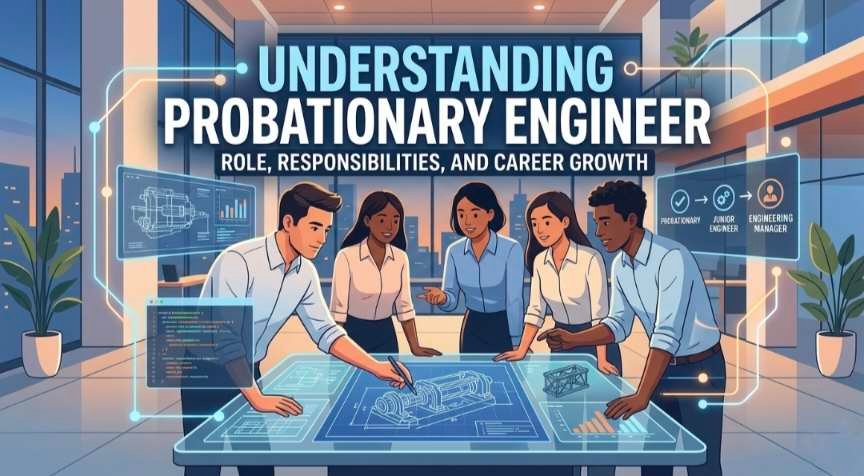
Entering the engineering profession often begins with a learning phase, and for many professionals this stage is known as the probationary engineer period. It is a crucial time when newly hired engineers adapt to the workplace, understand organizational standards, and apply their academic knowledge to real projects.
This early career stage helps both employers and employees evaluate whether the role is a good fit. While companies assess technical abilities, work ethic, and communication skills, the engineer gains practical exposure to industry operations, project management, and teamwork.
For young professionals, this stage often lays the foundation for long-term career growth. With proper mentorship, hands-on tasks, and clear expectations, engineers can quickly develop the confidence and expertise required for full professional responsibilities.
What Does a Probationary Engineer Do?
A probationary engineer is usually a newly recruited professional who works under supervision for a specific period before receiving permanent confirmation in their role. This stage is common in industries such as civil engineering, mechanical engineering, electrical engineering, and information technology.
During this time, the engineer learns company procedures, project standards, and operational workflows. The goal is to ensure the individual understands the organization’s technical requirements and professional expectations.
Typical tasks during this stage include assisting senior engineers, analyzing technical drawings, supporting project planning, and participating in design discussions. These responsibilities provide valuable experience and help build a solid professional foundation.
By actively participating in projects and collaborating with teams, engineers gain insight into how theoretical concepts from university translate into real-world engineering solutions.
Skills Required During the Probation Period
Technical Knowledge and Learning Ability
Strong technical knowledge is essential for success in any engineering role. However, a probation period also emphasizes the ability to learn quickly. Engineers must adapt to company software tools, technical standards, and project workflows.
This stage often requires reviewing engineering designs, performing calculations, and assisting with testing or inspections. Learning from experienced professionals plays a significant role in improving practical skills.
Communication and Team Collaboration
Engineering rarely happens in isolation. Professionals must communicate with project managers, technicians, designers, and clients. A probation period helps engineers practice effective communication within multidisciplinary teams.
Clear reporting, asking questions, and actively participating in meetings are important habits that contribute to professional development and workplace efficiency.
Training and Professional Development
Many organizations provide structured training programs for newly hired engineers. These programs are designed to strengthen technical skills while introducing workplace procedures and safety standards.
A probationary engineer may attend workshops, technical seminars, or internal training sessions during this period. These learning opportunities help bridge the gap between academic education and practical engineering work.
Training may also include learning project management tools, understanding documentation processes, and becoming familiar with quality control systems. Such exposure improves both technical and organizational abilities.
Mentorship is another valuable aspect of this phase. Senior engineers often guide new employees, share professional advice, and help them understand complex engineering challenges. This mentorship accelerates learning and builds confidence in handling responsibilities.
Performance Evaluation and Confirmation
Assessment Criteria
At the end of the probation period, organizations evaluate an engineer’s performance before confirming them as a permanent employee. This evaluation usually considers several factors.
Employers review technical competence, problem-solving ability, work quality, and professional behavior. They also assess how well the engineer collaborates with colleagues and meets project deadlines.
Supervisors may provide feedback throughout the process so the engineer can improve performance and meet expectations.
Career Progression After Probation
Once the probation period is successfully completed, a probationary engineer often transitions into a full engineering role. This confirmation usually comes with greater responsibilities and opportunities for professional growth.
Engineers may begin leading small project components, supervising technical tasks, or participating more actively in design decisions. With experience, they can advance toward senior engineer, project engineer, or management positions.
The probation phase therefore acts as an important gateway to long-term engineering careers.
Challenges and Opportunities in the Early Career Stage
Starting a professional engineering career can be both exciting and challenging. New engineers often face the pressure of adapting to workplace expectations while learning complex technical tasks.
One common challenge is balancing theoretical knowledge with real-world application. Engineering projects involve deadlines, budget constraints, and safety requirements that may not always appear in academic coursework.
Another challenge is adjusting to teamwork and organizational structures. However, these experiences provide valuable lessons that help young engineers grow professionally.
For a probationary engineer, every task offers an opportunity to gain experience. Whether assisting with site inspections, preparing technical documentation, or analyzing project data, each responsibility builds practical expertise.
By staying curious, asking questions, and learning from mentors, new engineers can transform this early stage into a powerful stepping stone toward future success.
Frequently Asked Questions
What is a probationary engineer?
A probationary engineer is a newly hired engineer who works for a temporary evaluation period before receiving permanent employment status.
How long does the probation period usually last?
The duration varies depending on the organization, but it typically ranges from three to six months.
What responsibilities does a new engineer have during probation?
Responsibilities may include assisting senior engineers, reviewing designs, preparing technical reports, and participating in project discussions.
Can an engineer be promoted after the probation period?
Yes. Once confirmed as a permanent employee, engineers often gain greater responsibilities and opportunities for career advancement.
Why is the probation period important?
It allows organizations to evaluate performance while giving engineers time to learn workplace processes and develop professional skills.
Conclusion
The role of a probationary engineer represents an important transition from academic learning to professional practice. During this period, engineers gain practical experience, develop technical competence, and adapt to the expectations of the engineering industry.
Through mentorship, training programs, and hands-on project involvement, this stage helps build the foundation for long-term career success. It allows new professionals to strengthen their problem-solving skills, improve communication, and understand real engineering challenges.
Although the probation period can be demanding, it also provides valuable opportunities for growth and learning. Engineers who approach this phase with dedication and curiosity often emerge more confident and prepared for the responsibilities that follow in their professional journey.